
Timeline
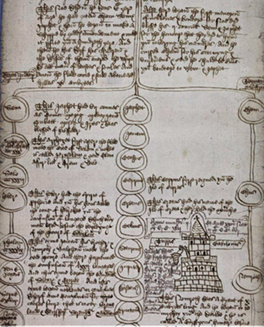
1527 – Ambrose Middleton and His Genealogical Roll
The Bar has always attracted polymaths of all kinds. Such was the case in 1527 when Ambrose Middleton of Barnard Castle was admitted to The Inner Temple on 28 May 1527.
Unlike many students admitted at this period, Middleton chose not to devote himself to carousing and drinking but penned a 17-foot paper genealogical roll in 1527 tracing the history of the world from Adam, via Noah and other Biblical figures. The earliest kings of England feature, such as Lud, Arthur and the Anglo-Saxon Kings. It ends with Harold and his death at the Norman Conquest. It is possible that it was copied by Middleton, but its completion at such an early date perhaps means that Middleton may have become distracted by other more irresistible temptations in London.
The manuscript was donated to Corpus Christi College by Thomas Whincop, fellow in 1692.
The Bar has always attracted polymaths of all kinds.
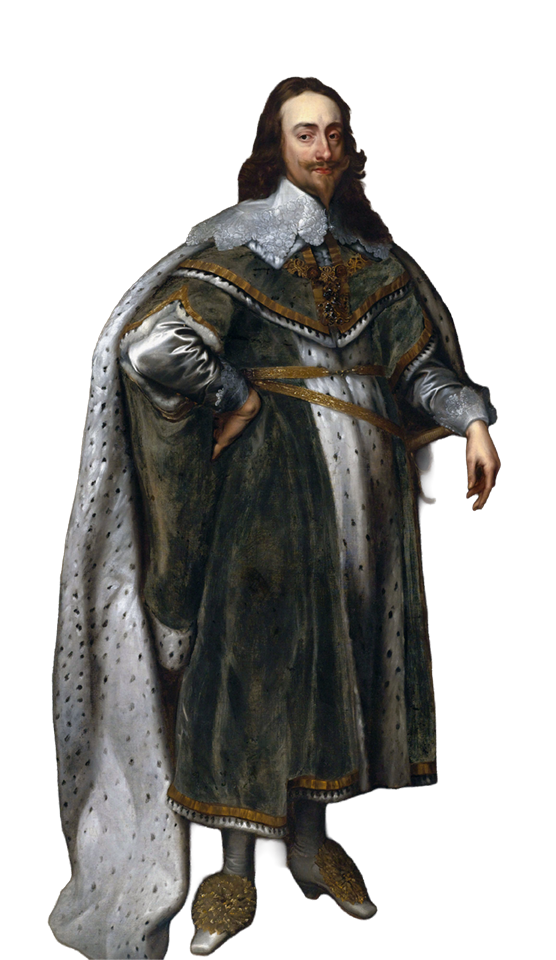 1627 – The Case of the Five Knights
In March 1627, the imprisonment of five knights sparked one of the most important constitutional disputes in English history, ultimately leading to the Petition of Right (1628). The case involved prominent Inner Templars, including John Selden (called 1612) for the defence and Sir Robert Heath (called 1603), Attorney General, for the Crown.
Unable to obtain sufficient parliamentary funding for war, Charles I imposed forced loans on his subjects and imprisoned those who refused to pay without trial. Seventy-six people were detained, and five knights challenged their imprisonment by seeking writs of habeas corpus.
Before Lord Chief Justice Sir Nicholas Hyde, the Crown argued that the King could detain individuals under the royal prerogative during times of national crisis without giving reasons. Selden countered that English law required every imprisonment to be supported by a stated legal cause, even when ordered by the King. Despite the absence of any specified offence, the court upheld the detentions per speciale mandatum domini regis (“by special command of the King”) and refused bail.
The judgment provoked widespread opposition in parliament and contributed directly to the Petition of Right (1628), drafted by Inner Templar Sir Edward Coke (called 1578), which declared that taxation required parliamentary consent and that imprisonment without lawful cause was illegal, reinforcing the principle that the Crown was subject to the law.
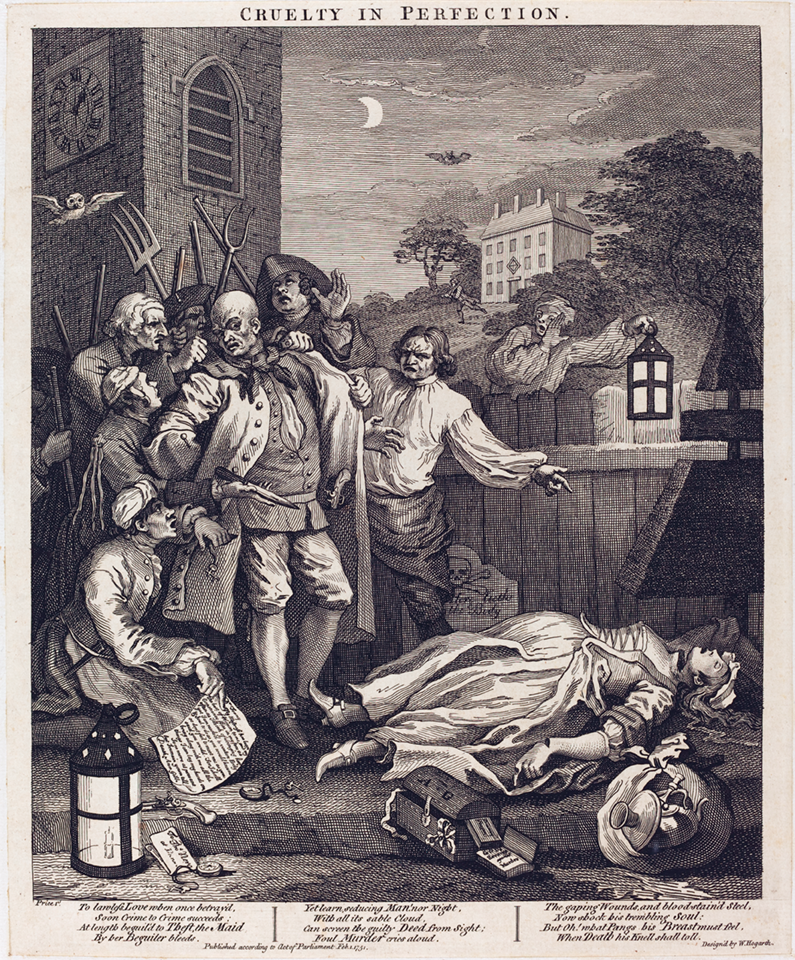 1727 – Murder in the Temple
Although violent crime was rare within The Inner Temple, the tranquillity of the precincts was shattered by a series of shocking murders during the late 1720s and early 1730s.
In 1727, Mr Darby, a clerk in the chambers of Sir George Cooke, Prothonotary of the Court of King’s Bench, was found murdered. He had been shot in the head, with wounds to his ear and hand, while his rings, watch and other valuables had been stolen. Six years later, in 1733, the Inn was again horrified by the triple murder of an elderly woman and her two female servants in Tanfield Court.
Darby’s murder caused widespread alarm among the Benchers, prompting immediate measures to improve security. At the Bench Table on 25 April 1727, it was resolved that:
“A sum of £100 be offered by this Society as a reward to any person (except such person as shall have committed the fact) for discovery of the person or persons who lately murdered and robbed Mr Darby residing in this Society.”
The reward was to be paid upon the conviction of the offender and the offer was advertised in the London Gazette.
The same meeting ordered that the number of Inner Temple watchmen be increased to ten. Just three days later, on 28 April, their number was doubled to 20. Watchmen were required to perform their duties in person, watch boxes were to be placed in every court, and the Chief Porter was instructed to provide the Under-Treasurer each evening with a list of those on duty.
Despite these enhanced security measures, Mr Darby’s killer was never identified, and the murders in Tanfield Court demonstrated that even the Inn’s strengthened watch could not entirely prevent violent crime.
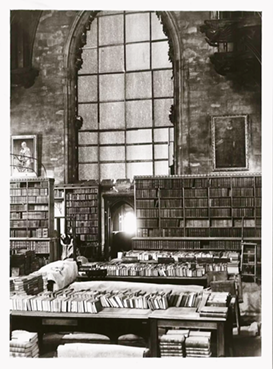 1827 – Death of Randall Norris
On 20 January 1827, Randall Norris, Sub-Treasurer of the Honourable Society of The Inner Temple, died aged 76. The Temple Church burial register records:“Randall Norris, esq., Sub-Treasurer of the Honourable Society of The Inner Temple, died January 20th 1827, aged 76 years and was buried in the Churchyard on the 27th of the same month, by me WH Rowlatt, Reader.”
Few servants of the Inn can have matched Norris’s loyalty and length of service. Admitted as a student in 1778, he was appointed Librarian in 1784, a post he held until 1806 on a salary of £20 a year. In 1801, he also became Sub-Treasurer, with a substantial increase in salary to £300 a year.
Norris was immortalised by Charles Lamb in his essay ‘The Old Benchers of The Inner Temple’. Writing to his friend Crabb Robinson after Norris’s death, Lamb described him:
“Letters he knew nothing of, nor did his reading extend beyond the pages of The Gentleman’s Magazine. Yet there was a pride of literature about him from being amongst the books, and from scraps of doubtful Latin which he had picked up in his office of entering students, that gave him very diverting airs of pedantry. Can I forget the erudite look with which, when he had been in vain trying to make out a black-letter text of Chaucer in the Temple Library, he laid it down and told me that ‘in those old books, Charley, there is sometimes a deal of indifferent spelling’, and seemed to console himself in the reflection!”
Lamb concluded his letter with a tribute to a man who had been a fixture of The Inner Temple for almost 50 years:
“In him I have a loss that the world cannot make up. He was my friend and my father’s friend, all the life I can remember.”
His 1806 Library catalogue, for which the Inn paid him £20, is still in the Library and can be viewed online:
https://babel.hathitrust.org/cgi/pt?id=chi.42148901&seq=6
The black-letter edition of Chaucer with which Norris had such difficulty can also be found in the Inn’s collection: The Workes of Our Ancient and Lerned English Poet, Geffrey Chaucer, Newly Printed; London: Printed for George Bishop, 1602; edited by Thomas Speght.
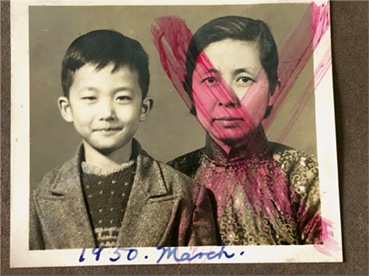 1927 – Teo Soon Kim (1904–1978),
Pioneering Singaporean Barrister
Called to the Bar at The Inner Temple in 1927, Teo Soon Kim made history by becoming the first woman admitted to the Straits Settlements Bar, the first woman barrister in Hong Kong, and the third Malayan Chinese woman to qualify as a barrister in England at a time when the legal profession was almost completely male.
Born in 1904, Teo was the eldest daughter of Singapore pioneer and rubber magnate Teo Eng Hock. After attending Methodist Girls’ School, she travelled to England in 1923 to study at University College London before entering The Inner Temple.
Although she appeared infrequently in court, Teo made history through her successful defence of her father, who had been detained by the Kuomintang authorities in China following his association with the Wang Jingwei regime during the Second World War. She secured his release and the restoration of the family’s assets.
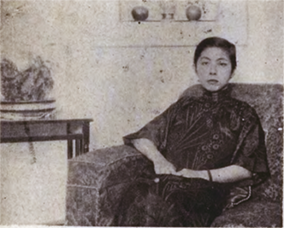 Teo later devoted much of her life to teaching English at universities across Asia. During China’s Cultural Revolution, she endured repeated persecution and imprisonment before her death at Anhui University in 1978. She ended her life alone in the tiny staff quarters of Anhui University in Hefei.
We commemorate her life and remember that her achievements opened the doors for future generations of women in the legal profession across Asia.
Called to the Bar at The Inner Temple in 1927, Teo Soon Kim made history by becoming the first woman admitted to the Straits Settlements Bar, the first woman barrister in Hong Kong, and the third Malayan Chinese woman to qualify as a barrister in England at a time when the legal profession was almost completely male.
Celia Pilkington
Archivis