
TEMPLE CHURCH MUSIC
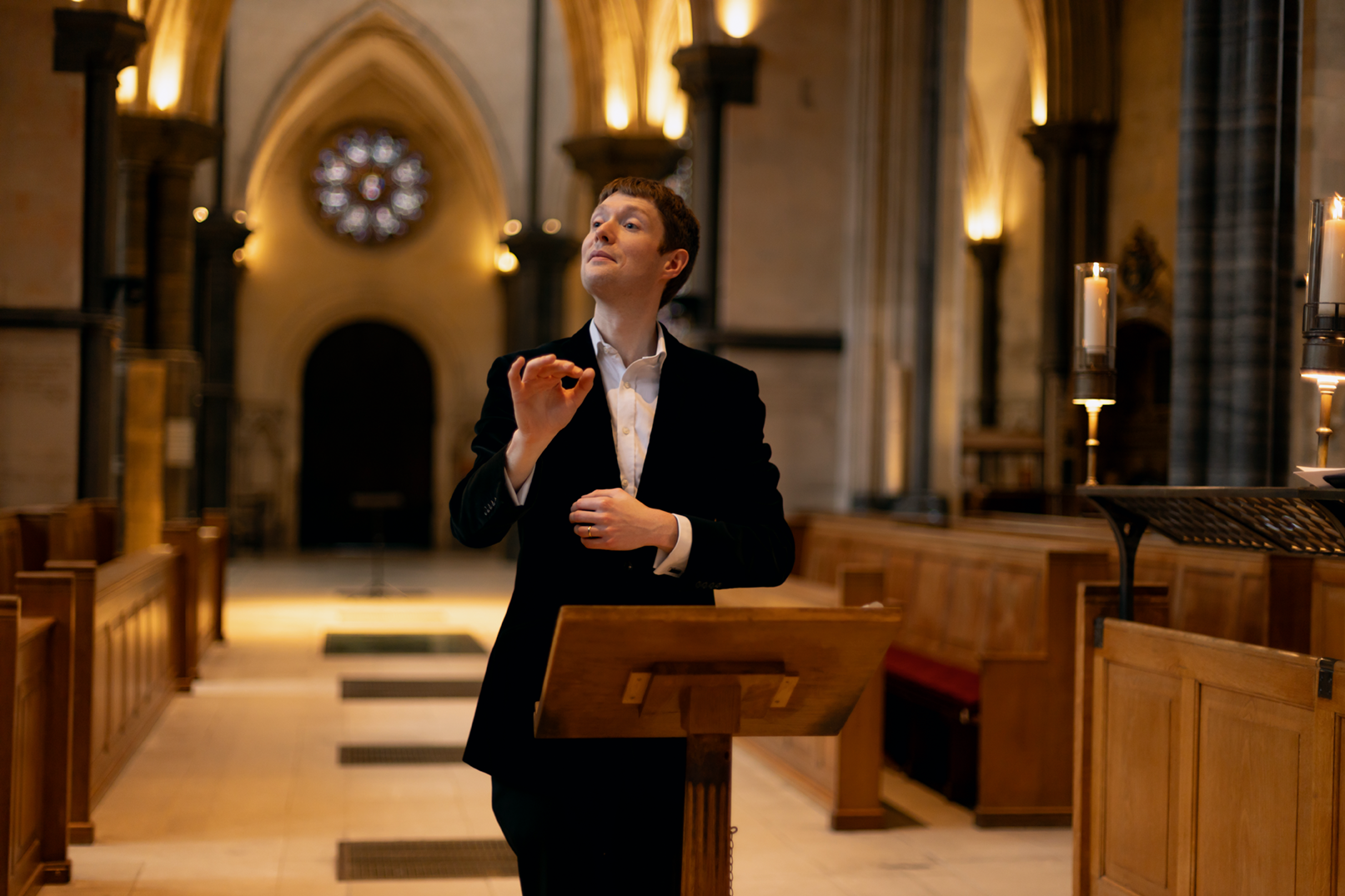
Thomas Allery, Director of Music of the Temple Church, speaks to Robert Ogden,
Chief Executive of the Temple Music Trust about programming and visions for
the future of music at the Temple Church.
Robert Ogden: This has been a very busy year for the Temple Church choirs. What have been some of your highlights in 2025–26?
Thomas Allery: Yes, I think it has been our busiest year to date. We started the legal year with a performance of Dixit Dominus by Handel, one of his early Italian sacred works, a piece full of dazzling virtuosic writing for choir and orchestra. That concert set off the year to a flying start, with our new cohort of choral scholars also taking part. We also performed the St John Passion by Bach for the first time in the church choir’s history and then closed the year with coronation anthems by Boyce and Handel and also Thomas Tallis’ motet for forty voices Spem in Alium.
Robert Ogden: Baroque works have a particular place in your programming at the Temple Church. What draws you to these?
Thomas Allery: I have always been drawn to the musical language of baroque music, for its dynamism and variety, and for the mindset one needs to bring it off the page. I trained as a harpsichordist as a postgraduate, so I have developed something of a specialism in the music of the 17th and 18th centuries.
There is very little written down on the page in music of this era, in terms of performance instructions, and so every performer must consider their phrasing, core sound, pacing, and ornaments with more freedom than in some later music. I feel happiest when able to combine my continuo playing at the harpsichord with direction, as this is how this music was designed to be performed. Baroque music is engaging and popular with audiences too: it is music full of contrast, with dancing rhythms alongside searing dissonance and sequence, designed to move and inspire the emotions. Children love to perform this music too, and so this music fits my vision for our chorister education. It is music perfectly suited to the acoustics of the Temple Church, with its balance of warmth and clarity.
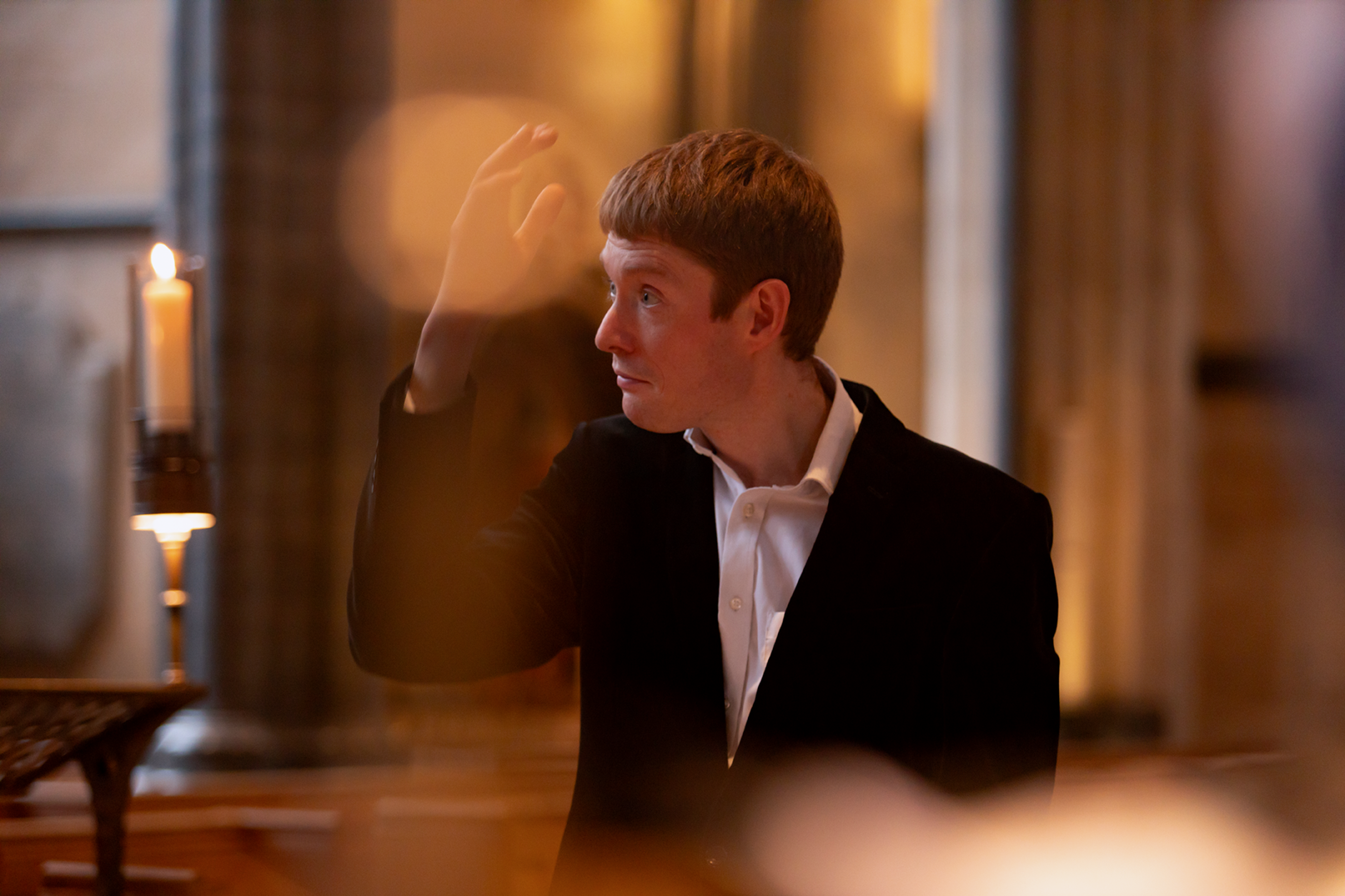
Robert Ogden: What is it like to direct from the harpsichord, rather than more traditional conducting?
 Thomas Allery: Baroque music was written before the modern notion of a conductor. Directing from an instrument therefore fundamentally changes all of the relationships on stage. The role of the leader (first violin) is also very important as they provide so much of the leadership to the rest of the orchestra, and especially the strings. You will notice that the strings always watch the leader’s bow to match its stroke and its speed, placement and intensity, to create different colours and, in turn, the leader is taking that energy and vision from the director. It becomes, above all, a far more collaborative process where everyone feeds ideas and energy into a whole, rather than just waiting for instruction. At the harpsichord, it is my job, therefore, to give the gestures and energy for the music, so eye contact and body language are crucial. Essentially, we are trying to create one big chamber ensemble, where each performer is contributing to the whole with their energy and vision, and reacting in the moment.
Robert Ogden: Performing Spem in alium by Thomas Tallis was a momentous occasion this year, in a concert dedicated to Robin Griffith-Jones on his retirement as Master of the Temple. Why did you choose that piece?
Thomas Allery: I wanted to dedicate a programme to Robin and thought that this piece seemed perfect, not only in terms of the experience of hearing forty voices in an amazing piece, but because of its text. A piece for forty individual parts is a monument of Western composition that is often performed as a concert piece but it is easy, therefore, to overlook the words it sets, which seem to perfectly capture the moment that a priest retires:
I have never put my hope in any other but in Thee,
God of Israel
who can show both wrath and graciousness, and who absolves all the sins of man in suffering.
Lord God, creator of Heaven and Earth,
regard our humility
From a responsory in the Sarum Rite, adapted from the Book of Judith
Hearing this piece live is a physical, emotional and spiritual experience. We placed the singers around the edge of the church so that the audience was surrounded by sound and could experience the layers of the piece physically.
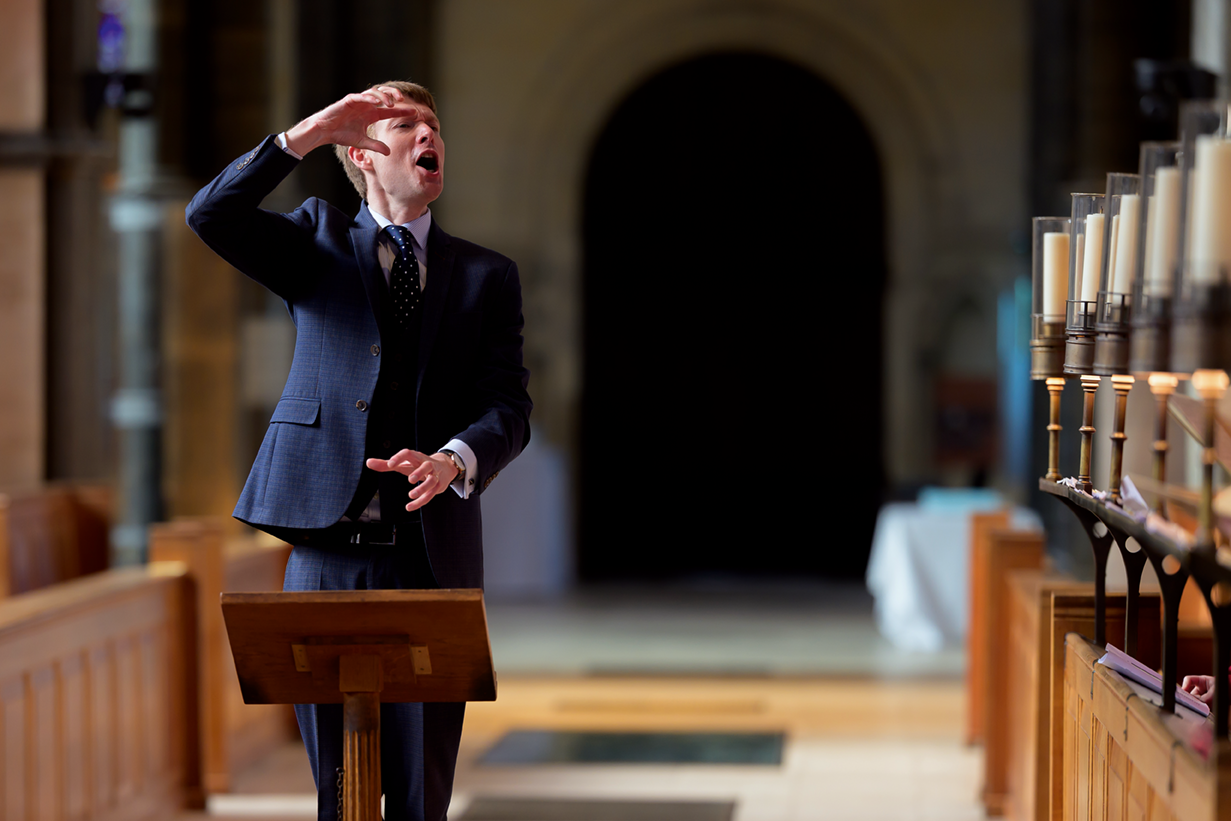 Robert Ogden: How did you go about pairing this with other works, with so many singers at your disposal?
Thomas Allery: My idea was to draw on themes of the Temple Church itself, and on strands which I know are central to Robin’s research and writing. We began with a piece for twenty-four voices by the 15th century Franco-Flemish composer Josquin des Prez, called Qui Habitas, a setting of psalm 91: “Whoso dwelleth under the defence of the Most High, shall abide under the shadow of the Almighty”, foreshadowing the themes we see in the Tallis. Here the twenty-four solo voices sing exactly the same line one after another: a sort of musical puzzle. I wanted to represent Robin’s support of the music at the church through John Tavener and Gabriel Jackson’s setting of Celia Virgo, a medieval poem for St Cecilia, the Saint of music. Two 16th century works by Andrea Gabrieli and John Taverner describe the resurrection, and the showstopping double choir Magnificat by Stanford represents the Church’s dedication to the Virgin Mary. I also included a modern piece for forty voices by David Bednall, which uses the same distribution of voices as Tallis to blazing effect to describe light.
Robert Ogden: What are some of your visions for the next few years, in terms of programming?
Thomas Allery: I want to continue to build our reputation for ambitious and innovative programming which allows our choirs to shine and share their joy of singing with our community and visitors. I am aware that careful programming is key to drawing new audiences to the church, so balance is crucial. I am also committed to performing and commissioning new works.
I feel grateful for the support we have at the Temple Church; from our communities, supporters, and audiences, and from working alongside you and the Temple Music Foundation to put on concerts in such an inspiring building in which I feel incredibly lucky to work!
Thomas Allery
Director of Music, Temple Church
Robert Ogden
Chief Executive, Temple Music Foundatio