
Sir John Finch and his unusual legacy
Sir John Finch, c.1665–70 (oil on canvas) © Dolci, Carlo (1616–86)
2026 is the 400th anniversary of the birth of Sir John Finch, a member of The Inner Temple. He is one of those I featured in a talk to the Inn’s History Society in 2019 on Temple Diplomats from the mid-16th to the mid-20th century(see Yearbook for 2020). Finch was clearly a polymath of learning and ability, though he left little mark on history in the many fields in which he was expert. But he remains well-known for a long and close relationship, immortalised in a splendid memorial in Cambridge.
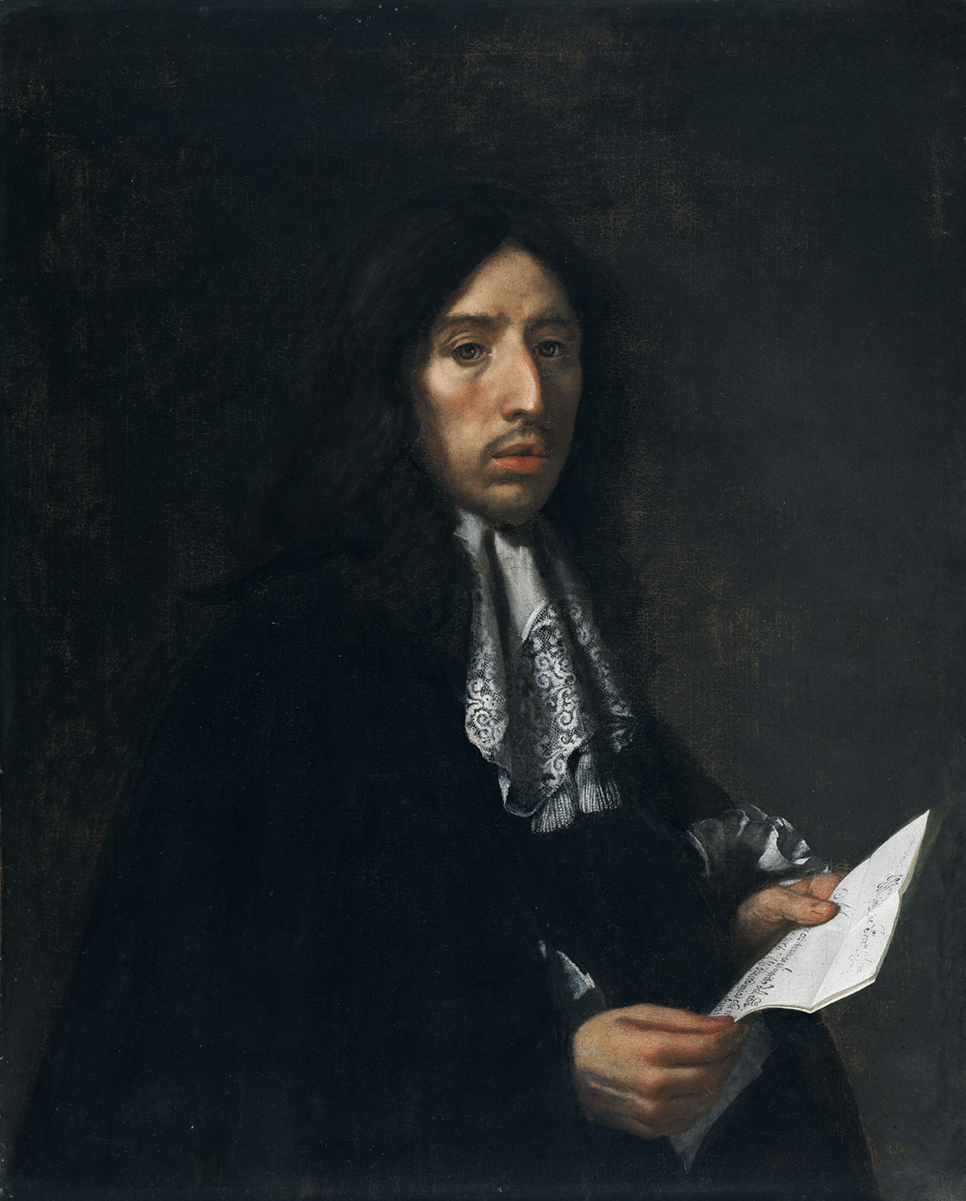
Finch came from an illustrious family of royalists (and perhaps served in the King’s army at some point). His father Heneage Finch had been Speaker of the House of Commons, and he was the younger brother of Sir Heneage Finch, 1st Earl of Nottingham, a Lord Chancellor and another Inner Templar (and a “silver-tongued lawyer”!). After obtaining a Bachelor of Arts degree at Oxford in 1647, John Finch studied at Christ’s College Cambridge with Henry More, the philosopher and theologian. It was there that he met his thereafter inseparable companion, Thomas Baines, who was four years older. Finch was admitted to The Inner Temple in 1644.
Together with Baines, in 1651 Finch embarked on a Grand Tour of Italy, following which they graduated together in medicine in 1656 from the University of Padua, where he was also appointed Pro-Rector and Syndic (slightly curiously, of the jurists at the University). In 1659, the Grand Duke of Tuscany, a Medici, had Finch appointed Professor of Anatomy at the University of Pisa. There he became known as a “lynx with a knife” and wrote learned essays on the torpedo fish and vipers as well as becoming embroiled in many academic disputes – in which he was consistently on the side of the conservatives rather than the innovators. His particular interest was the anatomy of the brain and both he and Baines were known as excellent anatomists from a technical point of view. He rejected an offer around that time to become English Consul at Padua, using the excuse that it meant getting drunk “at least forty times a year”. More probably he wished to avoid an overly close relationship with the Cromwell Protectorate.
Finch was clearly a polymath of learning and ability, though he left little mark on history in the many fields in which he was expert. But he remains well-known for a long and close relationship, immortalised in a splendid memorial in Cambridge.
Finch and Baines (who became Professor of Music at Gresham College) returned to England (together with the monarchy) in 1660. They were both simultaneously made Fellows of the Royal College of Physicians and Finch was knighted by King Charles II (proving the wisdom of having avoided the Consular Commission). Cambridge made them Doctors of Physic (again simultaneously) and in 1663 they were ‘nomination Fellows’ of the Royal Society – notwithstanding this, neither ever contributed papers to the Society. Despite all these signs of favour, Finch seems to have been rather unenterprising and more inclined to lose himself in poetry and philosophy – his correspondence with the pedantic Baines indicates that his was by far the finer intellect. Baines’ influence over him was considerable though – he soon saw off a young lady from Warwickshire who appears to have taken Finch’s eye in 1661. Both men were active collectors of fine art.
The ‘two doctors’ returned to Italy briefly in 1663 and from 1665 to 1671 Finch was a largely undistinguished British Minister to the Ducal Court at Florence, where he had Baines appointed physician to the Legation. It was a time of many conflicts between the Tuscan authorities and British residents of the region, which took up his time: perhaps because of that he did little or nothing to promote Anglo-Italian cultural relations. Despite Finch’s love for Italy, and especially Tuscany, he was soon complaining about the level of remuneration for this role. His many friends therefore arranged to have him appointed Ambassador in Constantinople in 1672, a position he took on somewhat unwillingly: “I doe perfectly abhorr the thoughts of goeing to Constantinople”. In those days it was not for the most part a prepossessing city – “a sink of men and sluttishness” as one of his predecessors in the role described it.
Baines was knighted through the influence of Finch’s brother-in-law Lord Conway in 1672 and accompanied Finch as friend and confidant – the merchants in Constantinople joked that there were two Excellencies, the Ambassador and the Chevalier. Finch’s position carried a generous salary of £2,500 a year plus perquisites, paid not by the British Treasury but the slightly more dependable Company of the Levant (whose leading members included some of his relatives). This enabled him to live in some style, assisted by the ambassadorial privilege of being allowed to import 7,000 measures of wine a year duty-free.
Finch was not however a successful English Ambassador to the Sublime Porte of the Ottoman Empire. The job had become somewhat dynastic, with Finch succeeding his recently deceased cousin Daniel Harvey – who in turn succeeded Finch’s uncle Heneage Finch, 3rd Earl of Winchilsea. The story of Finch’s time there has been written up in considerable detail by George Abbott in his very readable and surprisingly amusing Under the Turk in Constantinople (pub. 1920). Aside from official papers, this is based on the copious contemporary writings of the Consul at Smyrna, the Treasurer at Constantinople and the Chaplain (John Covel, later Master of Christ’s College from 1688).
A major task of Finch’s in Constantinople was to obtain the Sultan’s confirmation of privileges formerly granted to English residents of his dominions (and oppose the efforts of other foreign competitors). But after a promising start and like many of the other long-suffering representatives and merchants based there, he ended with few or no substantive achievements to his name. Although he possessed a modicum of diplomatic skill and understanding of mercantilism, Finch was constantly outwitted by the Grand Viziers Ahmet Koprili and Kara Mustafa. This was despite investing quantities of his measures of best wine on the former, which the Court euphemistically referred to as “English sherbett”. The latter, more violent and grasping than his predecessor, was sadly not even susceptible to this form of diplomatic bribery. As Finch put it, “…the perplexity of doeing affayrs is still attended with more of difficulty and intrigue, by having to doe with a people who neither in language, custome, manners, or religion, have any affinity with us”. He was also obliged to keep a careful eye on the machinations of various Dutch and French colleagues.
Despite never publishing anything, between 1674 and 1681 Finch and Baines wrote a great deal about statecraft, religion and the Ottoman Empire, which remains of interest. Finch in particular developed a theory of sovereignty in which liberty and coercion are seen as equally useful and legitimate tools of governance. While believing in freedom of conscience, he set bounds on tolerance in order to preserve peace and decorum. The academic Sarah Hutton has speculated that his views may have influenced the architect of the 1689 Toleration Act, his nephew Daniel Finch, 2nd Earl of Nottingham.
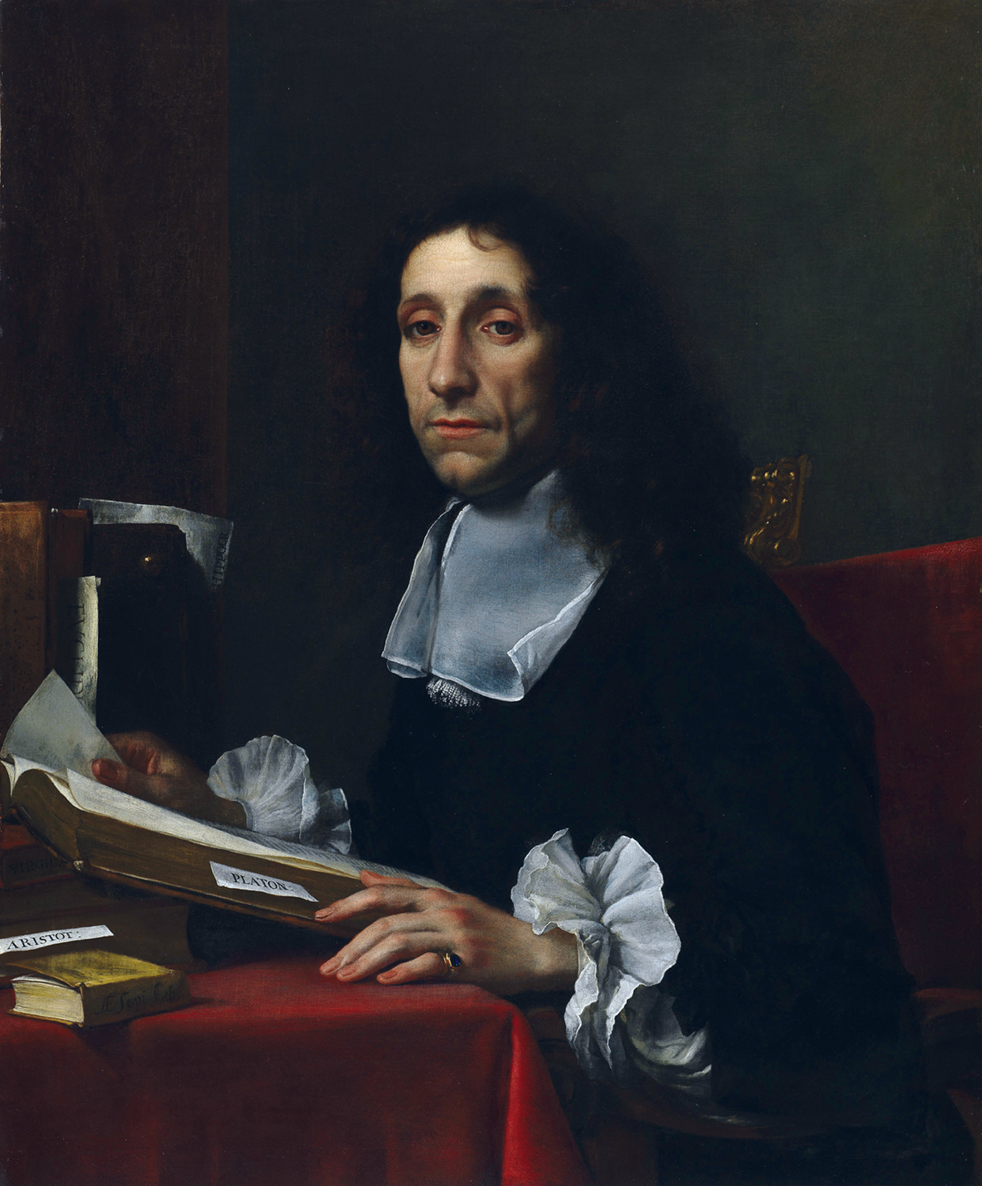
Baines died of malarial fever at Constantinople in 1681, after Finch’s successor Lord Chandos had arrived in Turkey and on the day when Finch received his own official leave to depart. Finch was distraught, writing that this had “cutt off the thread of all my worldly happiness”. He described their relationship as a “sweet and unbroken marriage of souls, and a fellowship undivided for thirty-six entire years” and “sacred to an unspeakable love”. After recovering from an attack of fever, he left Turkey with the embalmed body of his friend, returning to England via Tuscany. Finch himself died from pleurisy in 1682, after which he was buried side by side with Baines under the same elaborate black and white marble canopy at Christ’s College. Their portraits by Carlo Dolci, painted during Finch’s Residency in Florence, hang in the Fitzwilliam Museum.
The exact nature of Finch’s relationship with Baines is not confirmed anywhere yet discovered. Contemporaries, at least, had no difficulty with it, often mentioning “the two doctors” with affection. And David Kinloch, the Scottish poet, has no doubts in Baines: His Dissection, in which Finch refers several times to his “lover”. (Abbott, in his fairly lengthy book, mentions “the vicarious pride of a lover” when commenting on Finch’s record of Baines’ theological utterances.) A passage on their final resting place reads:
“…I’m determined we’ll have our own display, dear Tom, our profession of unusual friendship, our trade as doctors, diplomats, decked out upon a Cambridge tomb, our ensigns of affection flagged up and out for prayerful and tourist to decipher.”
Greg Dorey CVO
Sub-Treasurer