
Reaching new heights
I shouldn’t take delight when friends who are also gardeners exclaim their envy when they come to the garden in awe of our Echium pininana, Melanoselinum decipiens and Geranium maderense. When hearing their endeavours to grow these wonders in other parts of the country, I realise how fortunate we are to have our special microclimate. The envy has been particularly strong this year where we have had an exceptional season for these spectacular plants – I would say the best in the eight years I have now been at the Inn.
There are many factors that makes The Inner Temple Garden special, and one is certainly the city microclimate. We are blessed by the protection provided by our impressive architecture and the River Thames to the south. This means that it is rare for the Garden to experience frosts below minus three or four. In some ways our microclimate makes gardening at The Inner Temple akin to mild coastal gardening in Cornwall or the Scilly Isles, where unusual specimens from all over the world can thrive if carefully tended.
The most dramatic of these are undoubtedly the impressive spires of Echium pininana, sometimes known as Tree Echiums. In the wild, these are endemic – native and restricted – to La Palma in the Canary Islands. There, they grow along sunny volcanic slopes and in the understory of prehistoric subtropical laurel rainforests known as Laurisilva. These rainforests consist of trees in the Lauraceae family and evergreen hard woods dating back twenty to forty million years. I have not been to see these in the wild yet, though they do bring back happy memories of my time at Tresco Abbey Gardens in the Scilly Isles where I was fortunate to do an exchange some seventeen years ago when I was a trainee at RHS Wisley. I remember being blown away by the iconic spires of Echiums growing alongside palm trees and huge agaves – they are now one of my favourite features of The Inner Temple Garden.
Echium pininana are biennial or triennial, meaning they create a rosette in their first year, which then takes another year or two to develop before then pushing the impressive spikes which are covered in thousands of small blue flowers. The nectar of each of the small flowers are over 26% sugar making them a magnet for bee species, butterflies, and moths. They are also monocarpic, so once they flower and have set seed, the plant then dies.
This year has been a standout year with mini groves flowering at once, alongside single specimens across the garden, all at what seem record heights. Our largest specimen this year measured an impressive 4.7m tall! It was certainly our most common question during our summer open days as to what the “huge spires of blue flowers covered in bees are”. We have allowed some of the seed to drop, and also collected seed to sow in seed trays, with the resulting plants then dotted in choice areas to look as though they have self-seeded naturally.
If the top prize for most questions goes to the Echiums, the second was to the wonderful large umbel that is Melanoselinum decipiens, commonly known as Black Parsley, or Madeiran Parsnip. This is fantastic, looking like cow parsley from a tropical dream-world with their large white to dusky pink flowers set on tropical stalks. ‘Melano’ means black and ‘selinum’ is Greek for parsley, the black referring to the large black seeds which develop after flowering.
Similar to Echiums, this plant also exhibits characteristic ‘gigantism’ an evolutionary phenomenon where plants isolated on islands free of large grazing mammals or other inhibitors develop large flowers, seed, or overall stature. Also monocarpic and biennial, these thrive in both sun and semi shade and are as beautiful in their winter form with their dried structural stems (similar to giant fennel) as in flower.
Another horticultural showstopper moment came from another island-dweller in early March, with the magenta domes of the Geranium maderense flowering across the High Border. This is also biennial or triennial, and monocarpic. In the wild in Maderia, it is also found in humid laurel forests, though near waterfalls and streams, and is classed as Critically Endangered. I love the vivid pink flowers which are such a rare colour for so early in the year.
Sophie, our talented Deputy Head Gardener, grew these from seed sown three years ago and has ensured they survived any cold spells out in the High Border – such as the one we had in late January where we wrapped the large domes covered in flower buds just to be on the safe side.
The magenta pink is not to everyone’s tastes –the Master of the Garden, Rosamund Horwood Smart was fortunate to see them in the wild in Maderia earlier this year, though she finds the colour not her favourite – we did have one plant produce white flowers flushed with pink this year which we have collected seed from which she will love. For those that prefer a more restrained colour palette there is also a pure white cultivar called Guernsey White.
For the Echiums we ensure we always have a succession of plants to guarantee that we get the wonderful flower spires each year. For the Gernaium maderense we have again collected seed to sow with a dramatic display planned for three years’ time. Thankfully we enjoy their dissected lush foliage so there is interest whilst we patiently wait for the dramatic flowers.
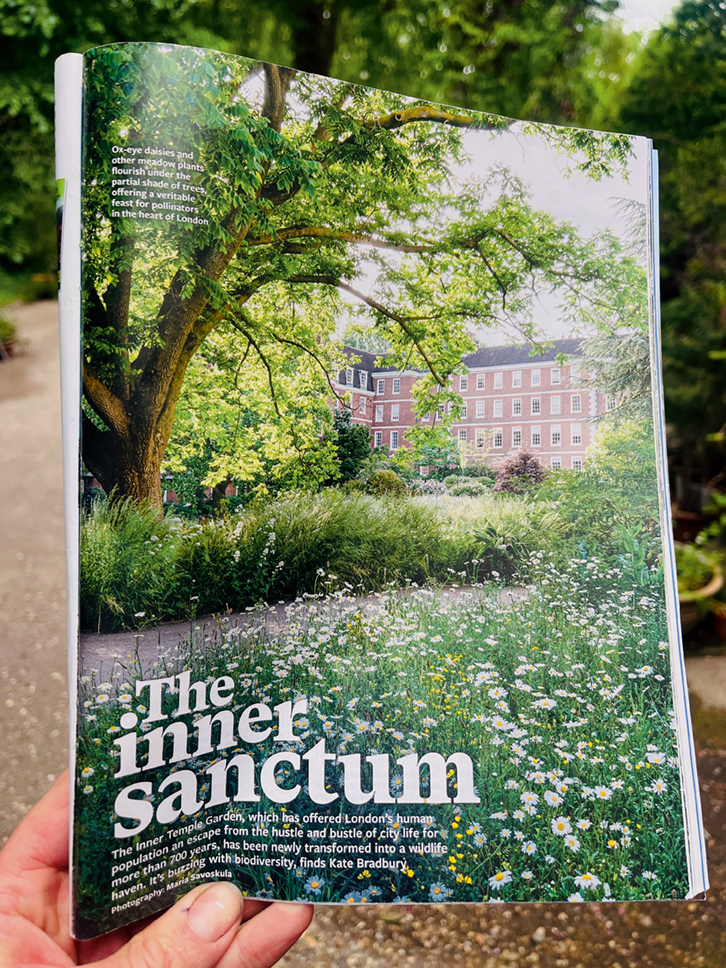
It has been an exceptional year in the Garden in many ways, which has been especially joyful to share with so many keen gardeners who have visited after reading the article in the May edition of the RHS’ The Garden magazine. The Inn was approached over a year ago by the RHS asking if they could commission writer Kate Bradbury – whose award-winning writing specialises in gardening with nature and for biodiversity – to write a piece on all the developments which have been taking place to develop The Inner Temple Garden for beauty and biodiversity. Of course, the Inn was delighted to accept.
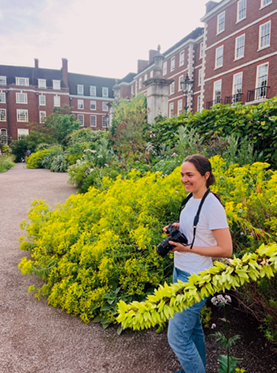
To accompany the piece, the RHS sent rising star of garden photography, Maria Savoskula to capture the garden in May 2025. Maria travelled from her home in Kyiv via two trains and then a flight from Poland, taking twenty-six hours. She was then in London for two weeks to photograph RHS Chelsea Flower Show and The Inner Temple before the same journey home. Maria is an exceptional photographer and plantsperson – It was inspirational hearing Maria share her experiences of gardening through the war where she too grows Geranium maderense on her balcony. The title of the subsequent article was The Inner Sanctum and it reconfirmed the importance of gardening for biodiversity but also the welfare of people in what are turbulent times.
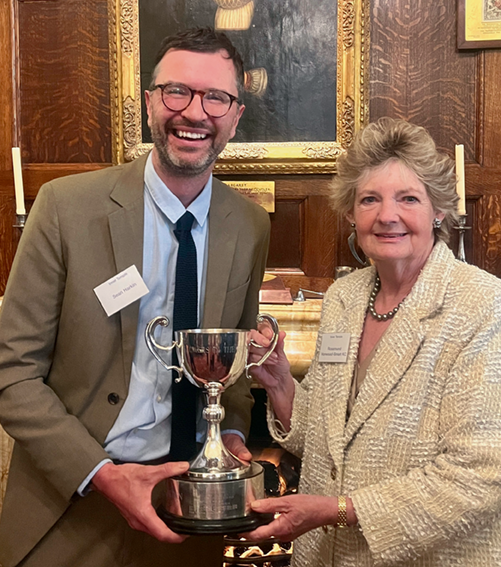
Also, earlier this year the Garden was delighted to receive the Chairman’s trophy from the Worshipful Company of Gardeners’ Flowers in the City awards. The judges were especially impressed by the “creativity,” “attention to details,” and commented on the “excellent example of the contribution to environmental enrichment”.
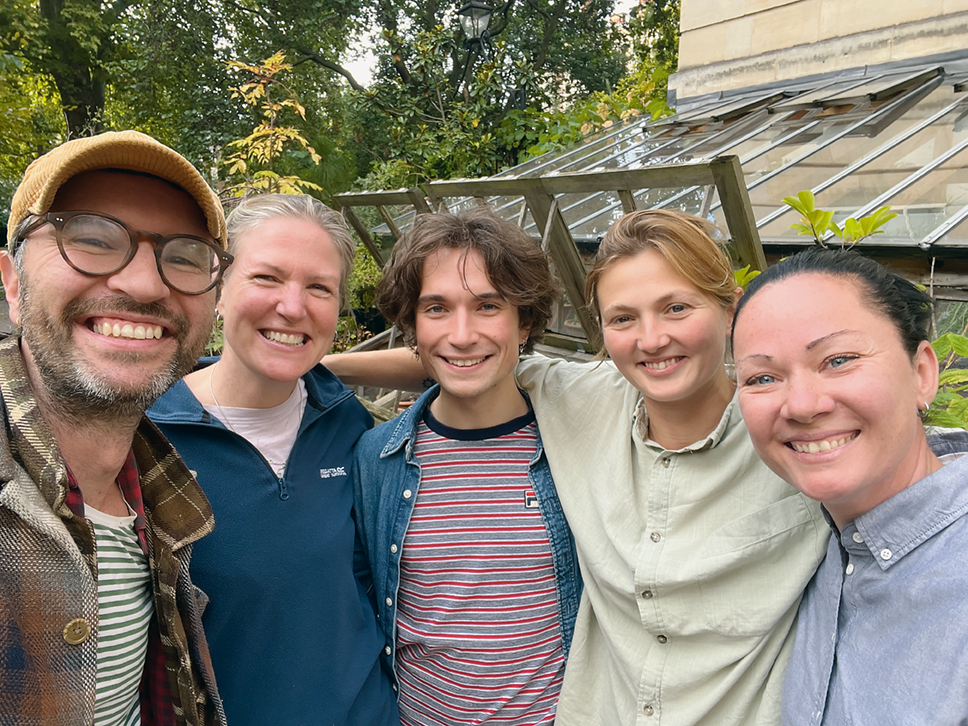
It is wonderful to get this acknowledgement which is the result of the talent and dedication of the whole garden team. As I write this article, our current trainee, Dylan is coming to the end of his two-year traineeship in the Garden. It is always a moment of pride for the team watching the garden trainee develop and grow, and it is now with excitement of what will come for Dylan in his horticultural career. Our new Trainee, Eve Kennedy will now join the team for her two years of experiencing our special microclimate, plant collection, and to be a part of developing our sanctuary for people and biodiversity.
Sean Harkin
The Head Gardener