Master Willink: The Forgotten Public Servant
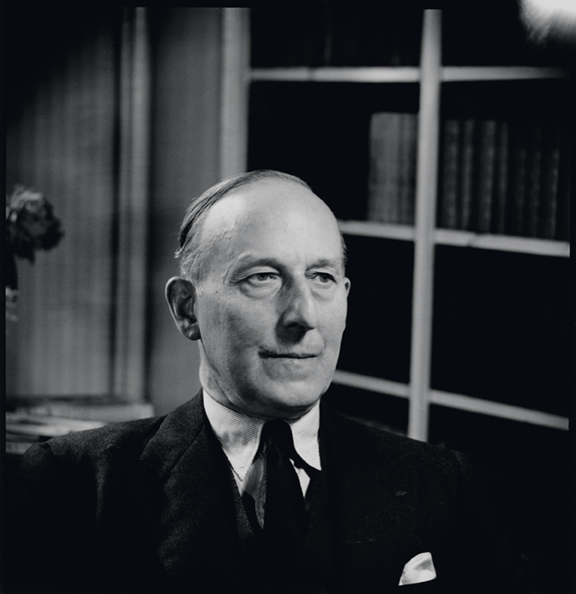
Henry Willink, who was elected a Bencher of the Inn in 1942, was a member of chambers at 3 Essex Court and a respected practitioner at the Commercial Bar when he took silk in 1935. He became a Conservative Member of Parliament in in 1940 and was Minister of Health in the wartime coalition. The historian Baroness Sheila Fowler called Willink “one of the most intellectually able members of the coalition government.” After his death in 1973 his obituary in The Times described Willink as “a man of exceptional gifts.” Yet, despite Willink’s undoubted abilities, he remains a forgotten figure in public life. This is largely due to the fact that he voluntarily resigned his seat in parliament in 1948 and did not return to private practice at the Bar. Instead, he devoted his life to public service by chairing two Royal Commissions and becoming Master of Magdalene College, Cambridge and later vice-chancellor of the university. Had he followed the career paths of his slightly older Conservative contemporaries in the House of Commons, David Maxwell-Fyfe and Donald Somervell, he might be better known. The former remained in parliament and became Lord Chancellor; the latter rose through the law and became a Lord of Appeal in Ordinary. As the Conservative historian, Andrew Gimson, commented in 2018 the name Willink ‘is seldom, if ever, on the lips of the man in the street.’ Members of The Inner Temple, however, should remember his achievements.
Henry Willink was born in 1894. By the time he was called to the Bar by The Inner Temple in 1920 he had obtained his degree as a scholar at Trinity College, Cambridge and had been awarded the Military Cross and the Croix de Guerre for his exceptional bravery as an acting Major in the Royal Field Artillery during the battle of the Somme in 1916. Like Donald Somervell, he became the pupil of William Jowitt, a commercial barrister who founded his own chambers at 1 Brick Court (later Brick Court chambers) and was later Lord Chancellor in a Labour government. At 3 Essex Court Willink quickly established a reputation as a commercial and common law barrister. As a junior he was appointed standing counsel to the Board of Trade. In 1932, Eustace Roskill, who became an appellate judge and a Law Lord, was his pupil. Willink’s busy junior practice propelled him into silk after 15 years’ Call, but, like Somervell, he had his eye on parliament. Somervell entered the House in 1931. Willink followed after a by-election in Croydon North in June 1940. His talents were immediately recognised. Three months after entering parliament Lord Wootton, Churchill’s Housing Minister, appointed him a special regional commissioner for the homeless in London. The job of regional commissioner, originating from bombing in the First World War, was to co-ordinate the fragmented and disjointed response to the Blitz in 1940.
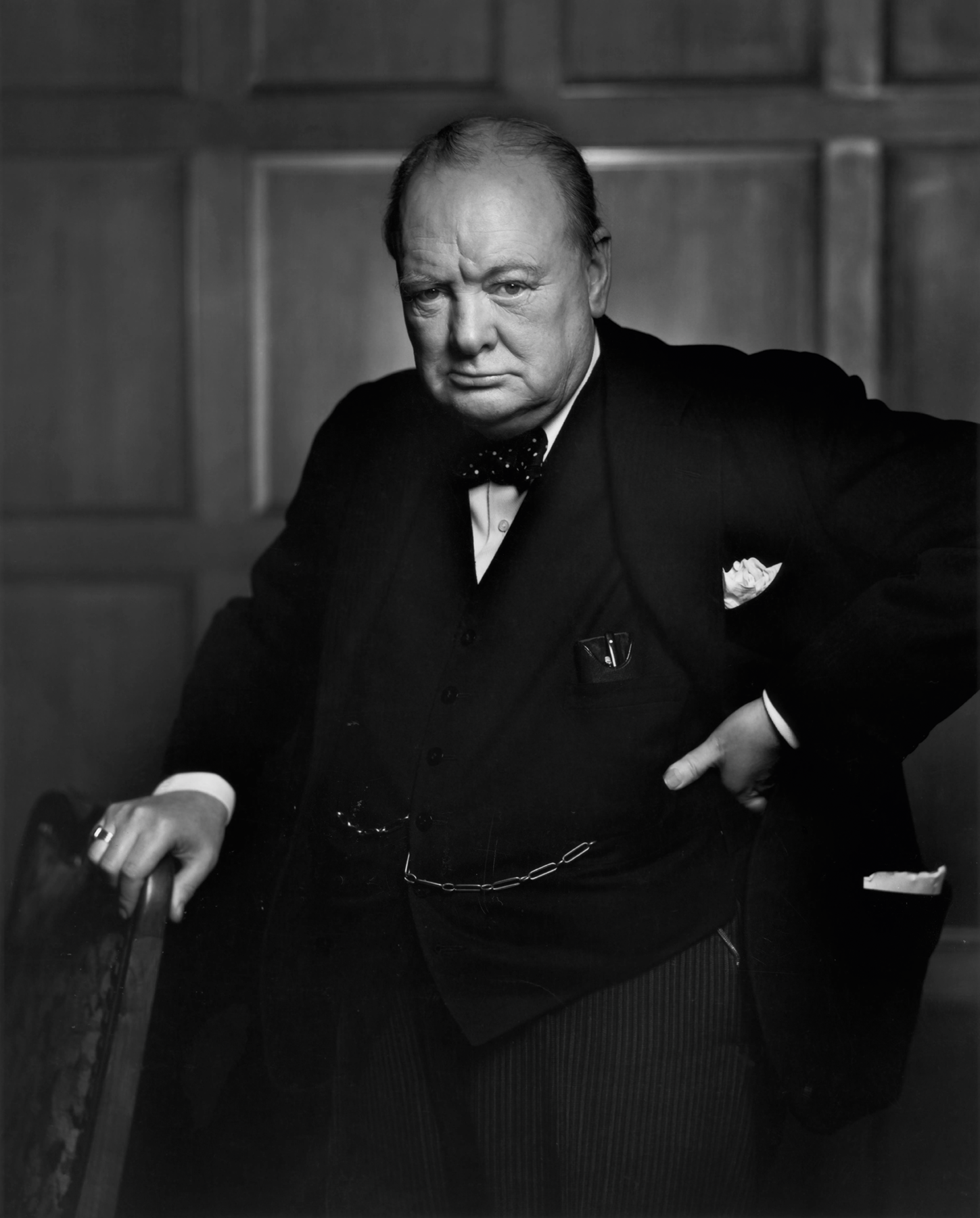
Historians have estimated at around a million and a half people in London (one in six of the population) were made homeless in the Blitz and Willink’s job was to organise, in conjunction with the construction industry, repairs to damaged houses and work with local authorities to provide temporary accommodation in rest shelters, camps or evacuation from London for families who had lost their homes. It was an enormous task but, by January 1941, 80 per cent of the damaged homes had been repaired sufficiently for people to return to their neighbourhoods. The Prime Minister, Winston Churchill, rewarded his efforts as regional commissioner by making Willink Minister of Health in his coalition wartime government in November 1943. He became a Privy Counsellor in the same year.
Library and Archives Canada, e010751643 via Wikimedia Commons
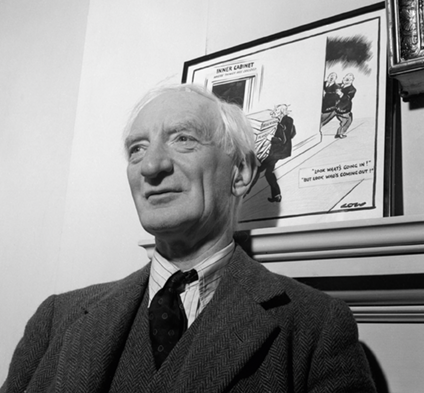
This was an important appointment. In December 1942, William Beveridge had published his report under the rather inauspicious title Social Security and Allied Services, but Beveridge was a broadcaster and a journalist as well as being an academic and he made sure the public became aware of his work. The first print-run of 60,000 copies sold out quickly and by end of 1944 more than 200,000 copies of the Beveridge Report were sold. Beveridge had caught the public imagination by his bold, not to say revolutionary, proposals to slay the ‘five giants’ that had cast their long shadows over the lives of ordinary people in the 1930s. The giants were Want (social security), Disease (health), Ignorance (education), Squalor (housing), and Idleness (unemployment). Public enthusiasm for the giants to be cut down and replaced with something better could not be ignored. Churchill’s wartime coalition took the decision that the broad principles of Beveridge would be accepted and implemented. In March 1943, Churchill took to the airways to announce that under his coalition plans would be put in place to make health care free for all “from the cradle to the grave.”
Beveridge had caught the public imagination by his bold, not to say revolutionary, proposals to slay the ‘five giants’ that had cast their long shadows over the lives of ordinary people in the 1930s.
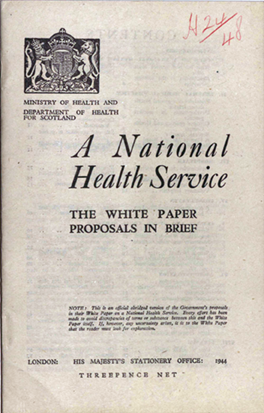
This was easier said than done. As Minister of Health, Willink had the difficult task of negotiating with the British Medical Association (BMA) and three Royal Colleges representing surgeons, physicians and obstetricians who each had their separate vested interests in maintaining the status quo which consisted of a complex patchwork of general practice being organised as small independent businesses and hospital care being divided between municipal hospitals run by local authorities and voluntary hospitals financed by paying patients and charitable bequests. Willink was occupied full-time in completing his negotiations and then writing the White Paper A National Health Service, which was published in February 1944. Inevitably, short of wholescale nationalisation and the entire provision of health care being placed under the auspices of the Ministry of Health, Willink’s proposals were something of a compromise. The wartime coalition could not agree on nationalisation. The incoming Labour government in 1945 did. Aneurin Bevan’s plans for implementing Beveridge differed from the coalition’s plans, but Willink’s discussions with the medical profession laid the groundwork for Bevan’s task in convincing the profession that change was necessary.
via Wikimedia Commons
Willink’s involvement in health policy did not end with the election of a Labour government. He became shadow health minister and had the arduous task of scrutinising the details of Bevan’s health Bill in its passage through parliament while being careful not to oppose the principle of the creation of a National Health Service. When the Bill finished its stages in parliament, Willink had been working full-time on either housing or health for the coalition or the Conservative opposition. In the meantime, under the wartime coalition Donald Somervell served as Attorney General and Maxwell Fyfe as Solicitor General. Both were able to maintain their links with the Bar through their daily work. Their appointments as law officers were to hold them in good stead later. Somervell lost his seat in the 1945 Labour landslide but on Jowitt’s suggestion the Prime Minister, Clement Attlee, made him a Lord Justice of Appeal. Maxwell Fyfe stepped up as Attorney General, a position that led inexorably to the woolsack in 1954. Somervell, by now a Law Lord, became Treasurer of The Inner Temple in 1957.
© Copyright expired. Courtesy of Ministry of Health via Warwick Digital Collections
The National Health Service came into being in 1948 and in the same year Willink voluntarily resigned his seat. It is likely he felt life as an opposition Member of Parliament was not sufficiently fulfilling as an occupation and his work on health and housing kept him away from the Bar. Returning to private practice as a silk who had been away for eight years was difficult. He built a new career as a public servant and academic administrator becoming Master of Magdalene College, Cambridge but his capacity for hard work and his decisive intellect made him the ideal candidate to chair a Royal Commission in 1949 on betting, lotteries and gaming. Willink found a regime of gambling and betting, in the words of his report, “obscure, illogical and difficult to enforce.” The betting industry was strictly controlled by a cartel of bookmakers who insisted that betting on horses and dogs could only take place on the racetrack but the general public who could not or did not want to attend a live race had to rely on unofficial ‘bookies’ runners’ who were breaking the law every time a citizen placed a bet with them on a horse or dog away from the racecourse. The police had the virtually impossible task of enforcing this law as runners merged into the crowd inside pubs and private clubs. While bookmakers, who made their living by on-course betting, lobbied for the law to remain unchanged, Willink had to pacify the Puritan streak within Britain which regarded all gambling as sinful. In the end, Willink was successful through strength of logical argument in recommending that off-course betting should be legalised, paving the way for betting shops and recommending also games of equal chance should be legalised leading to Bingo Halls springing up in Britain’s towns and cities. Willink saw his recommendations put onto the statute book in the Betting and Gaming Act 1961.
The National Health Service came into being in 1948 and in the same year Willink voluntarily resigned his seat. It is likely he felt life as an opposition Member of Parliament was not sufficiently fulfilling as an occupation and his work on health and housing kept him away from the Bar. Returning to private practice as a silk who had been away for eight years was difficult. He built a new career as a public servant and academic administrator becoming Master of Magdalene College, Cambridge but his capacity for hard work and his decisive intellect made him the ideal candidate to chair a Royal Commission in 1949 on betting, lotteries and gaming. Willink found a regime of gambling and betting, in the words of his report, “obscure, illogical and difficult to enforce.” The betting industry was strictly controlled by a cartel of bookmakers who insisted that betting on horses and dogs could only take place on the racetrack but the general public who could not or did not want to attend a live race had to rely on unofficial ‘bookies’ runners’ who were breaking the law every time a citizen placed a bet with them on a horse or dog away from the racecourse. The police had the virtually impossible task of enforcing this law as runners merged into the crowd inside pubs and private clubs. While bookmakers, who made their living by on-course betting, lobbied for the law to remain unchanged, Willink had to pacify the Puritan streak within Britain which regarded all gambling as sinful. In the end, Willink was successful through strength of logical argument in recommending that off-course betting should be legalised, paving the way for betting shops and recommending also games of equal chance should be legalised leading to Bingo Halls springing up in Britain’s towns and cities. Willink saw his recommendations put onto the statute book in the Betting and Gaming Act 1961.
While the government took time to digest Willink’s report, Harold Macmillan, who greatly admired Willink, was now Prime Minister. He revived an ancient constitutional practice of baronetcy creation by recommending to the Queen that Willink be created a baronet in 1957. The creation of baronetcies, in the gift of the sovereign, was used extensively by James 1st in 1611 to create a style of “lesser nobility” who could be called ‘Sir’ (there were no ‘Dames’ in those days) in exchange for providing the King with an income. The creation of new baronetcies had fallen into disuse in modern times, and it was a tribute to Willink’s past and present work that Macmillan should so honour him. But Willink’s public service was not over. In the mid-1950s a series of scandals involving corruption within the police was sapping public confidence. In 1960, Willink was asked once more to chair a Royal Commission with a wide brief “to review the constitutional position of the police in the United Kingdom.” The Commission were not required specifically to make proposals about police corruption and Willink concentrated on the out-dated administrative structure which he concluded “had remained unchanged since Victorian times.” There were more than 158 separate police forces bearing no relation to the size of the population the police were serving nor the crime levels within the areas covered by the forces. Willink proposed route and branch reform involving new combined police areas, the abolition of the cosy relationship between chief constables and Watch Committees consisting of local councillors and he recommended that complaints against an individual officer or a police force in general be conducted by an individual from another force. The Commission’s proposals led to the Police Act 1964 being passed by parliament.
It is arguable that Willink’s work as chairman of two Royal Commissions which led to substantive changes to betting and gambling and to the organisation of the police were just as valuable to the nation as the work he might have done as Attorney General, Home Secretary or Lord Chancellor had he not chosen to resign from the House of Commons in 1948. His only competitor for those positions was David Maxwell Fyfe. There was such a dearth of legal talent on the Conservative benches that Churchill was forced to appoint Walter Monkton KC as Solicitor General who did not have a seat in parliament in his caretaker government in 1945. It is doubtful, however, if Willink ever regretted leaving parliament. His entry in the Oxford Dictionary of National Biography notes that he was his happiest at Cambridge where he remained Master of Magdalene until 1966, a member of the council of the senate from 1951–60 and Vice Chancellor from 1953–5.
Willink proposed root-and-branch reform of a police system that had remained unchanged since Victorian times
He was sustained throughout his life by a profound Christian faith and was Dean of the Court of Arches from 1955–71, a post recently held by another Inner Temple member, Master Charles George.
At the memorial service of Sir Henry Urmston Willink, 1st Baronet, MC PC QC in February 1973, held in Westminster Abbey, the address was given by the Archbishop of Canterbury, a fitting tribute to a life well-lived in the service of others.
His Honour Inigo Bing