Inner Templars and the Birth of the United States
The role of lawyers from all Inns, and none, in the creation of the United States, is generally well recognised. Many of the Founding Fathers had some level of legal training; more than half of the 50 or so commonly counted amongst the Founders. The greatest number of those were members of the Middle Temple, including famously five signatories of the Declaration of Independence. However, members of The Inner Temple also had a significant part to play, both in the revolutionary moment and, perhaps even more interestingly, in establishing the common law on the American continent, and developing a distinct American legal culture, based in the shared heritage of the common law that continues to unite the legal culture of the Temple to that of the United States, 250 years on from its founding.
Roger Ludlow (1590–c.1664, admitted 1612): The First American Member
Ludlow was born in Dinton, Wiltshire, second son of a gentry family that included among its wider members Edmund Ludlow, Inner Templar, Parliamentarian and regicide. He matriculated at Baliol College, Oxford on 16 June 1610, before being admitted to The Inner Temple on 28 January 1612. He was chosen as an assistant to the newly established Massachusetts Bay Company, setting sail for America on the 20 March 1630, settling at Dorchester, Massachusetts. Almost as soon as he landed, Ludlow was appointed to the Court of Assistants, then the highest court in the colony, then appointed Deputy Governor in 1634, but defeated in the 1635 gubernatorial election by John Haynes. Ludlow and others, dissatisfied with what they saw as the de-Puritanising of the Colony, received permission to settle in three foundations downstream the river Connecticut: Hartford, Wethersfield, and Windsor, where the Ludlows lived. The settlers’ movement provoked a response from Native American communities in the region, and the Pequot War was the background to Ludlow’s petition to Governor Winthrop of the Bay Colony, for the colonists around the River Connecticut to unite themselves into a separate self-governing colony.
© Svgalbertian, Public Domain
via Wikimedia Commons
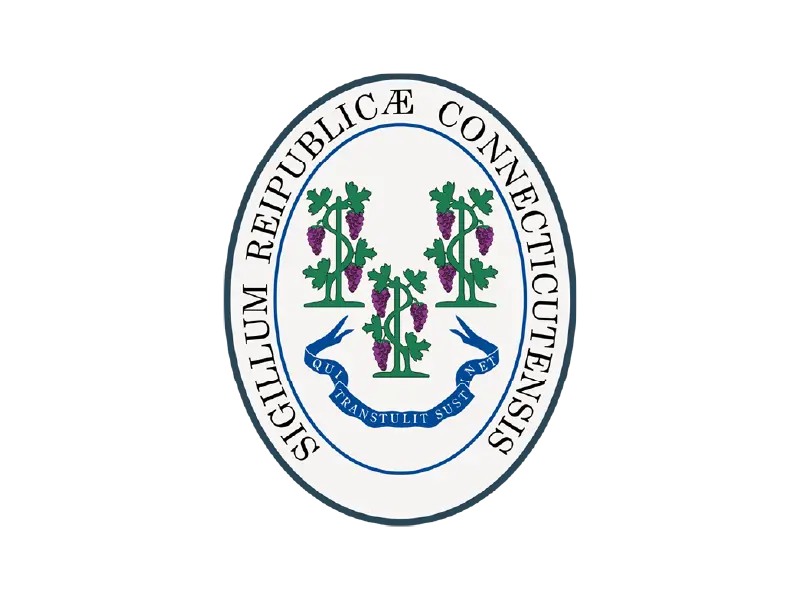
The Fundamental Orders of Connecticut, adopted by the General Council of Connecticut on the 24 January 1639, are the first example of a written constitution in America. The drafting is traditionally attributed to Ludlow; certainly he was a member of the convention that adopted it. Ludlow served as a magistrate in 1637 and 1638, before being elected as the first Deputy Governor of Connecticut in 1639. He then served variously as a magistrate and the Deputy Governor. The General Court appointed Ludlow on 9 April 1646, to draw up a law code for the colony, which was eventually adopted in May 1650. It dealt alphabetically with topics from ‘Actions Civil’ to ‘Wrecks’ but was also deeply infused with the harsh moralism of the New England Puritans, containing entries on ‘Witchcraft’, ‘Lascivious Carriage’ and a whole entry on ‘Shuffleboard’ and its prohibition. His final years in Connecticut were marred by a trial for slander, falsely accusing a woman of witchcraft.

© Glasshouse licensed under CC BY-SA 4.0.
He left for Virginia in May 1654 and from there to Ireland in September, being appointed on 3 November by Cromwell to his Commission for the administration of justice in Ireland. Parish records for his death no longer exist, but it is estimated as occurring between 1664 and 1668, in Dublin.
William Spencer (1666–1705, admitted 1685): The First American-Born Member
Spencer was born in Virginia, in the county of Westmoreland, where his father Nicholas Spencer, a member of Lincoln’s Inn, had settled after emigrating in the mid-1600s. William was schooled in England, first at Northill, Bedfordshire, near the family estate at Cople, then at Christ’s College, Cambridge, matriculating in 1685, before being admitted to The Inner Temple on the 22 June of the same year. William’s return was due to his adoption as heir by his uncle, his father’s eldest brother, who had remained childless, and William was to take up his position as the squire at Cople. His uncle and father died within quick succession, leaving the American possessions, including multiple properties and slave-plantations, to other members of the family, and William coming into his role in England. Standing unopposed in the Bedford by-election of 1698, William was returned as one representative for the two-member constituency. He seems to have been Whig, being noted in lists of supporters and receiving pensions from Whig patrons, and his voting record does seem to draw this out. He had apparently decided not to stand for re-election, winding down his Parliamentary attendance. He did, however, change his mind, standing again in 1705, but coming last amongst all candidates. By October of that year he had died, being buried at Cople on the 20th of the month. This compounded with other tragedies, and by 1720 all of his brothers had died, and the Cople estate was sold to the Duchess of Marlborough; the American plantations descended through the female line.
Colonel Daniel Coxe (1673–1739, admitted 1691): Pioneering Political Unionist
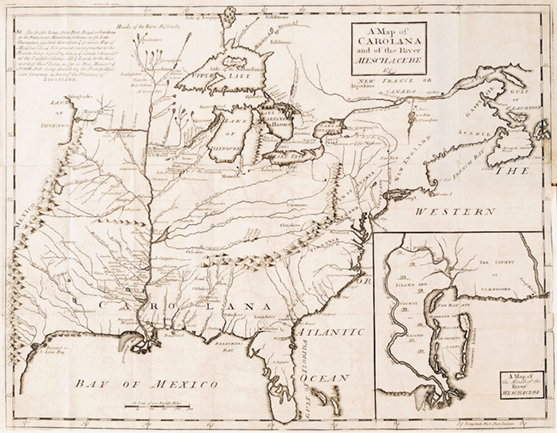
Coxe was born in the environs of London, being baptised in St Botolph, Aldersgate. His father, Dr Daniel Coxe, had purchased the patent to the province of Carolana, a territory covering what is now central Virginia southward though Florida and west into the Mississippi valley. He funded a variety of expeditions to the area, whose settlement was prevented by pre-existing French and Spanish colonies, before property in West and East Jersey. Coxe the younger first made the Atlantic crossing aged 28, in 1701, settling on family property in West Jersey, becoming in quick order a member of the council, Speaker of the Assembly and a Judge of the Supreme Court and, eventually, receiving the honorary title of Colonel, granted by the Governor.
In addition to his active participation in the life of the colony, he had been collating the papers brought back from the various expeditions his father had funded to Carolana, which he eventually published in London in 1722 as A Description of the English Province of Carolana. While of historical interest generally for its descriptions of the areas it surveys, it is primarily remembered for containing the earliest printed plan for a colonial union: a confederation under a Supreme Governor, to whom the other Governors are subordinate, and a General Council to be created consisting of two members elected by the assemblies of each colony. This pioneering proposal was not taken up by anyone at the time, but provided the basis upon which Benjamin Franklin later developed his ideas. Marrying into the Quaker upper class in West Jersey, Colonel Coxe died on 25 April 1739, being buried in St Mary’s Church in Burlington, New Jersey.
Stephen Bordley (1710–1764, admitted 1729): Leading Lawyer and Citizen
Stephen was born in Annapolis, Maryland, in early 1710, to Thomas Bordley, member of the House of Assembly, a leading lawyer and sometime Attorney General. Colonial society had grown, still looking to London and England for leadership, but confident in its own identity. The Bordleys were members of the burgeoning colonial gentry and Stephen’s generation was representative of the newly confident colonial society, with Annapolis described by one British observer as the Bath of America, with a society polished to match any in Britain. Stephen was educated in England, and after his father’s death left him with a sizeable income, derived from both city property and plantation holdings, he turned to the law. Admitted to The Inner Temple on 5 November 1729, he returned the Annapolis in 1733. There his talents, breeding and drive launched him to the front rank of the Maryland legal profession, and by 1740 was established among the leading lawyers in the state. He then moved into politics, just as the growing political storm that would eventually break in 1775 was beginning to build.
He began his political life associated with the ‘country’ party opposed to the proprietor of the colony, representing British power, but over his career gradually moved away. In 1750, he was a Commissioner for Maryland on the board delineating the Maryland/Pennsylvania border, then elected to represent Annapolis in 1754. His conversion to the proprietary party was sealed in 1756 on his acceptance of the roles of Attorney General and naval officer for the port of Annapolis. He was also a moving force in the social life of the colonial aristocracy: his library was esteemed the best in Maryland, his tastes – both artistic and gourmand – were refined, his attendance at the various dances, clubs, races and dinners of the area was unquestioned. Finally, he was the legal mentor of Thomas Johnson, future Governor of Maryland, and William Paca, another Inner Templar. Bordley died in 1764, just as the colonial society that he loved was on its way out, with the political tensions that were the background to his life becoming starker.
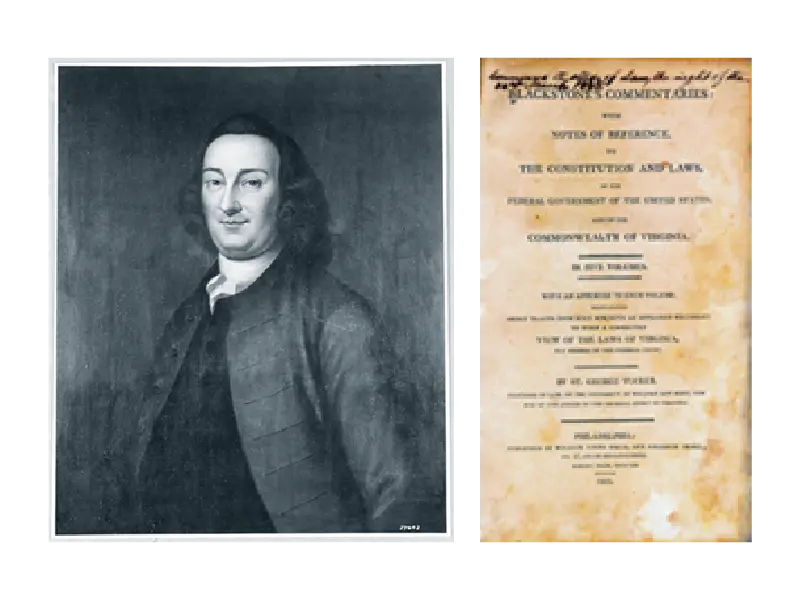
Tucker Blackstone Commentaries Frontespiece
© George Wythe Collection, Wolf Law Library, College of William & Mary
William Paca (1740–1799, admitted 1762): Inner Templar, Founding Father
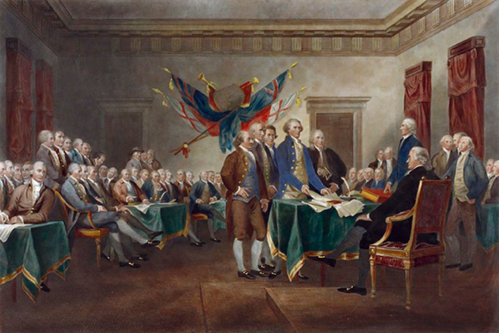
Born in Baltimore, Maryland, to John Paca, a wealthy slave-plantation owner, on 11 April 1740, Paca was educated at the College of Philadelphia (now the University of Pennsylvania), and was admitted to The Inner Temple on 14 January 1762, and to the Maryland Bar on 11 April 1764. He rose to prominence due to his opposition to the Stamp Act 1765, helping found the local chapter of the Sons of Liberty with Samuel Chase. From 1771–1774 he was a member of the Provincial Legislature, notable as a leader of the revolutionary cause, and, from 1774–1779, was a delegate from Maryland to the Continental Congresses. This culminated in his signing of the Declaration of Independence, the only signature of an Inner Templar on the Declaration.
He returned to take up a position in the new State of Maryland, serving as a State Senator from 1777–1779, and from 1778–1780 as Chief Judge of the Supreme court of Maryland. In 1780, he was elevated as the Chief Judge of the Court of Appeals in the Case of Capture, the United States’ first federal court, dealing with prize and admiralty work, but returned to Maryland as Governor in 1782, staying in the role for six years. In his retirement, President George Washington, in a recess appointment, appointed him to the newly created District Court for the State of Maryland, following its creation with the ratification of the US Constitution in 1788. He held this position from 1789 until his death in 1799.
St George Tucker (1752–1828, admitted 1773): Professor, Poet, Judge, Writer
Born in Bermuda on 10 July 1752, to Henry Tucker, a merchant, St George was sent to finish his education in the Colony of Virginia, aged 19. He entered the College of William and Mary, graduating the following year, taking private lessons in law from George Wythe, later a signatory of the Declaration of Independence. St George went to England to continue his legal studies, being admitted to The Inner Temple on 19 November 1773. He fought in the Revolutionary War, serving in the Virginian militia, rising to lieutenant-colonel and serving with distinction at Yorktown. In 1782, St George began his legal career anew, quickly rising to prominence such that, in 1788, the Virginian legislature appointed him to the reorganised General Court, where he served until his elevation to the state Court of Appeals, in 1804. His retirement in 1811 was short lived, being appointed by President James Madison to the federal district court in Virginia in 1813, serving there until 1824. While serving on the bench, St George also found time to write poetry, political satires, political pamphlets, essays and take copious notes of the cases before him.
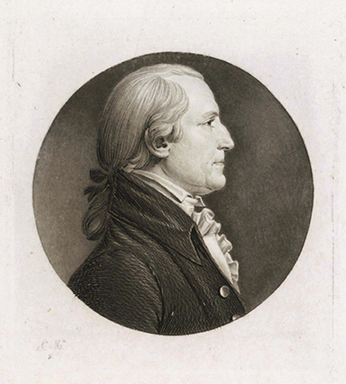
Public domain via Wikimedia Commons
In addition to his judicial work, St George was a key influence in the professionalising of legal education. In 1779, the first professorship of law in the United States had been established at the College of William and Mary, with the first holder being St George’s old teacher, George Wythe. When he resigned in 1790, the College elected to award St George a DCL and appoint him to the post. The course was taught from Blackstone’s Commentaries, but as yet there was no detailed treatment of the differences that there may be with American law. In 1804, St George published a five-volume annotated edition of the Commentaries, the first systematic effort to describe the outlines of the new federal system, based on his lectures that had analysed the ways in which American and Virginian law had departed from that set out in Blackstone. This became a leading legal text, the first major treatise of American law. He was also one of the only Southerners to specifically propose the elimination of slavery in his Dissertation on Slavery, noting the fundamental contradiction between slavery and the principles of democracy underpinning the United States. Although one of the first detailed histories of slavery in North America, its proposal for emancipation was weak, outlining a process that would take nearly a century. His intellectual qualms did not stop St George from owning slaves, nor for working for the College, a slaveholding institution, until 1804. St George died at Warminster, Virginia, on 10 November 1828.
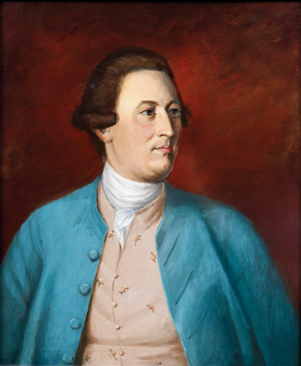
The influence of The Inner Temple can be seen at all levels of the story of the birth of the United States, and the lives of the Inner Templars as characteristic of that story in all its contradictions. In the early colonial period, Inner Templars, such as Roger Ludlow, helped to establish the legal order in the new English colonies in North America, embedding the ideas of the common law and the forms that provided the basis for a new legal culture to grow. People like William Spencer demonstrate the interdependence of this period, coming ‘home’ to his family’s holdings to serve as MP. Colonel Coxe marks the passing of the old-style explorer and colonist into the new established societies that have grown up on the eastern seaboard. Stephen Bordley’s life shows the high point of this colonial aristocracy, polished society, and learned men at home in both their identities as colonial and British subject. The shaky foundations of the relationship between the colonies and the UK were exposed during William Paca’s life, compounding political crises culminating in the breaking point of the Revolutionary War and, ultimately, the Declaration of Independence, 250 years ago. What the second part of men like Paca and St George Tucker’s lives, crossing the divide of colony and independence, shows is the strength of the legal and political culture that had developed in British North America. The materials and legal culture was put to the use of newly independent societies. This story can be seen concluding with Tucker’s annotations to Blackstone. It is fitting, maybe, for an Inner Templar to be the one to produce the United States’ first major legal treatise, and to do so based around the Middle Templar Blackstone’s text. Taking this as a synecdoche, we can say that The Inner Temple influence has come full circle: from the first written constitution in America, of a colony, to the first work of constitutional exegesis of the newly independent country.
Rory Bell
Archives Volunteer